If you've searched "CAE engineer jobs" and landed on a dozen listings that all sound the same, you're not alone. Job titles like "CAE Simulation Engineer" or "CAE Analyst" get thrown around loosely, and it's genuinely hard to tell which industries are hiring for real, ongoing work versus which ones post a role once a year and forget about it.
So let's cut through that. Here's where CAE engineers are actually being hired today, what they're doing, and why the demand isn't slowing down anytime soon.
Automotive: Still the Biggest Employer of CAE Talent
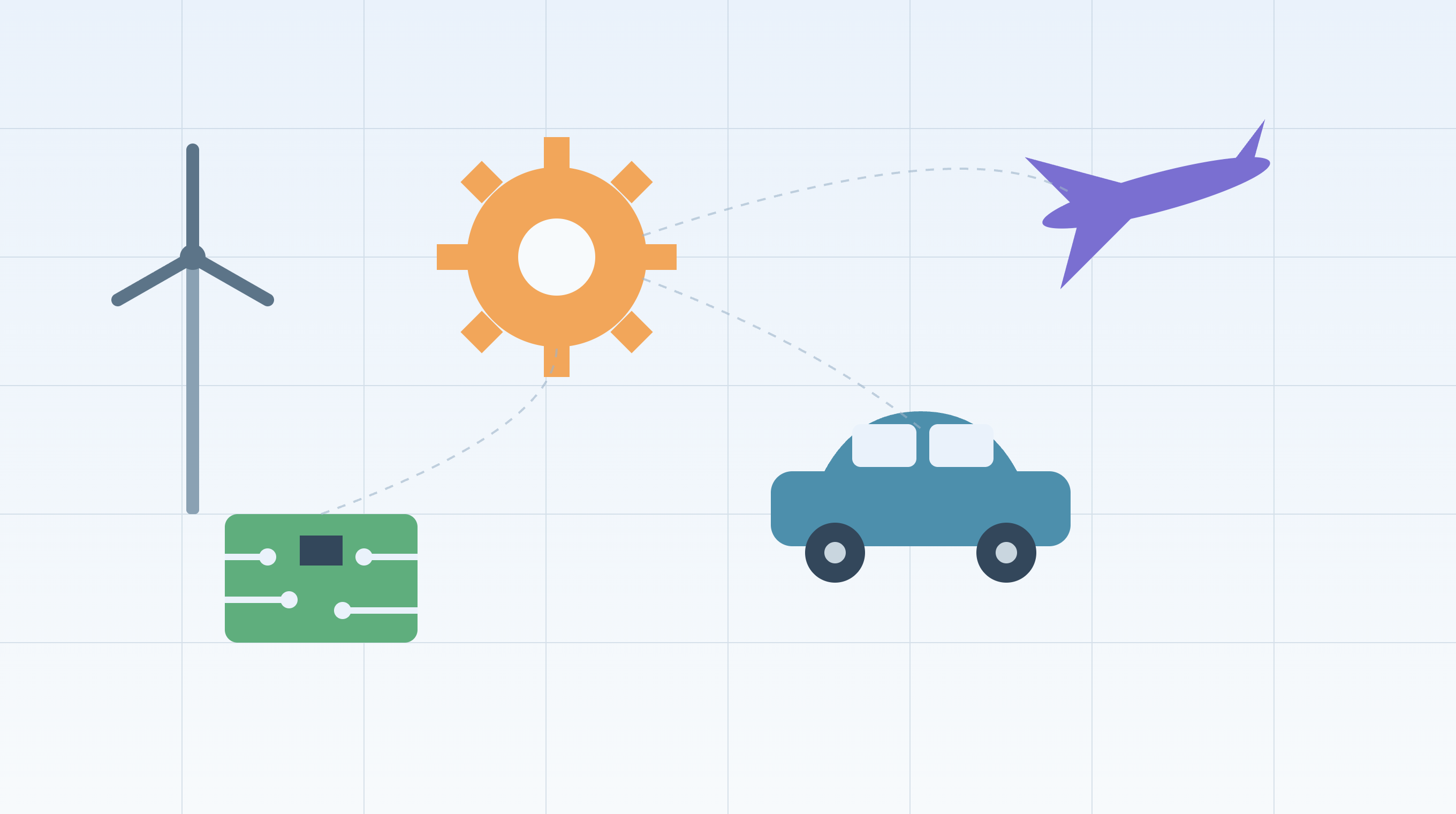
Automotive remains the single largest consumer of CAE skills, and it's not just about crash testing anymore. Companies need engineers who can run structural, durability, and NVH (Noise, Vibration, Harshness) simulations across entire vehicle platforms — long before a physical prototype exists.
What's changed is the why. With electric vehicles, battery packaging, thermal management, and weight optimization have become just as critical as crash safety. A CAE engineer today might spend as much time simulating battery enclosure stiffness as they do running a frontal impact test.
Roles to watch for: Crash & Safety Engineer, Durability Engineer, NVH Engineer, Structural Analyst.
Aerospace: Smaller Pool, Higher Stakes
Aerospace hires fewer CAE engineers than automotive, but the roles pay well and demand deep expertise. Every structural component — from a wing spar to a landing gear bracket — goes through rigorous stress, fatigue, and thermal simulation before it's certified. Mistakes here aren't just costly; they're safety-critical, which is exactly why aerospace employers value engineers who understand both the software and the underlying physics, not just button-clicking in Ansys or Abaqus.
Industrial Equipment & Heavy Machinery
This sector doesn't get as much attention online, but it's a steady, reliable employer of CAE talent. Manufacturers of pumps, compressors, construction equipment, and industrial machinery use structural and thermal simulation to cut down on physical testing costs and speed up product development cycles. These roles tend to be less flashy than automotive but often offer more stability and less project-to-project churn.
Electronics & Consumer Products
As products get smaller and more complex, thermal and vibration simulation has become essential in electronics manufacturing — think circuit board cooling, enclosure durability, and drop-test simulation for consumer devices. This is a growing space for CAE engineers who also understand thermal analysis, since overheating and component failure are constant concerns in compact electronics.
Energy and Renewables
Wind turbine blade design, structural analysis for solar mounting systems, and simulation work in energy storage are quietly becoming a meaningful source of CAE hiring. This sector is newer to the CAE conversation, but it's growing fast as renewable energy infrastructure scales up globally.
Engineering Services & Consulting Firms
A large chunk of CAE hiring doesn't come from product companies directly — it comes from engineering services firms that provide simulation work on contract to automotive, aerospace, and industrial clients. These firms often hire in bulk and value engineers who can work across multiple software tools (Ansys, Hypermesh, ANSA, Abaqus, LS-DYNA) rather than specializing in just one.
What This Means If You're Learning CAE
A few patterns show up consistently across all these industries:
- Tool fluency matters more than tool loyalty. Employers rarely want someone who only knows one software. Comfort across Ansys Workbench, Mechanical APDL, and pre/post-processing tools makes you far more employable.
- Specialization pays off eventually, but breadth gets you hired first. Most freshers start with general structural or thermal analysis before moving into a specialization like crash, NVH, or durability.
- CAD knowledge is not optional. Every CAE role assumes you can read and troubleshoot a CAD model before you simulate it. If you don't have that foundation, it's worth building it alongside your CAE learning, not after.
- Real project exposure separates candidates. Employers can tell the difference between someone who's clicked through software tutorials and someone who's actually solved a structural or thermal problem end-to-end.
The Bigger Picture
CAE hiring isn't concentrated in one industry that could disappear overnight — it's spread across automotive, aerospace, industrial manufacturing, electronics, energy, and consulting. That spread is exactly why CAE remains one of the more resilient specializations within mechanical engineering: even if one sector slows down, simulation-driven product development is now standard practice across almost every engineering-heavy industry.
If you're mechanical engineering student or a working professional considering a CAE certification, the real question isn't if the industry is hiring — it clearly is, across sectors. The question is whether your skill set matches what these employers are actually looking for: tool proficiency, physics fundamentals, and hands-on project experience.